
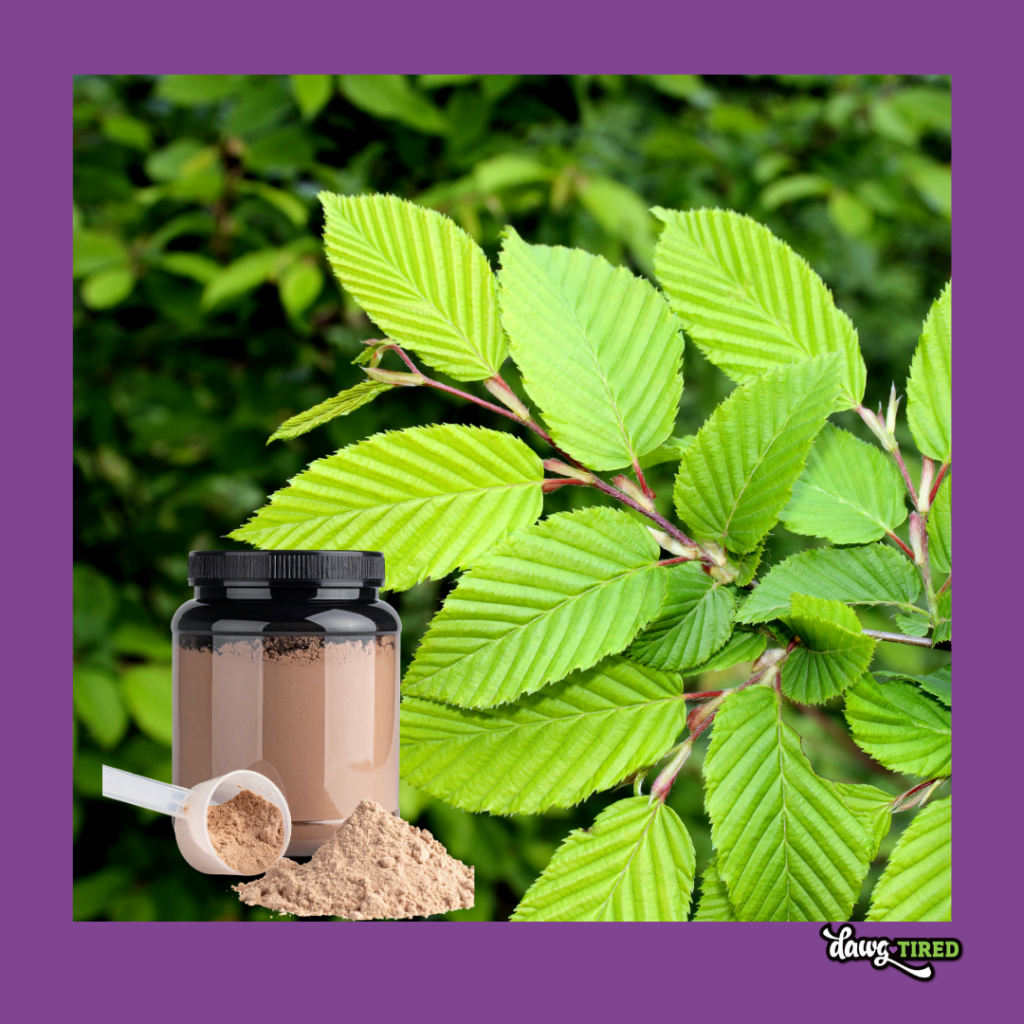
20 years. Tens of thousands of dogs. And one $8 powder we are never without: slippery elm.
It’s tree bark, ground fine. When a dog’s gut is off — loose stool, mild nausea, the runs after they ate something dumb at the park — it coats and soothes the digestive tract like a gentle internal balm.
We stir a little into food. Dogs take it easily. It’s cheap, natural, and gentle enough for sensitive tummies and senior dogs. An amazing supplement for Kennel Cough — it coats and soothes the throat and help ease their cough. At the first sign of a hack, we use it. The bonus is that it is high in vitamin C for that immune boost!
But after two decades of keeping it stocked in every kennel cupboard, we figured it was time to actually explain why this stuff works — and everywhere else it earns its keep beyond the after-the-trash-can cleanup.
What Slippery Elm Actually Is
Slippery elm comes from the inner bark of the Ulmus rubra tree, native to eastern North America. Ground into a fine powder, it’s mostly known for one standout property: mucilage.
Mucilage is a natural gel-forming fibre. Mix the powder with water (or let it meet the moisture already in your dog’s gut) and it turns slick and gel-like — a demulcent, in herbal terms. That gel forms a thin, soothing coating over irritated tissue, wherever it travels. That’s the whole trick. Simple ingredient, elegant mechanism.
Where It Helps
The digestive system (its bread and butter)
This is what most guardians reach for slippery elm for, and for good reason. The gel coats the lining of the stomach and intestines, calming inflammation and easing:
- Diarrhea and loose stool (the classic “ate something they shouldn’t have” scenario)
- Mild nausea and occasional vomiting
- Constipation — yes, it helps both directions, since it regulates rather than just loosens or binds
- Acid reflux and gastric upset
- Flare-ups tied to colitis or inflammatory bowel disease, as a supportive comfort measure alongside your vet’s plan
It won’t fix what’s causing chronic GI issues. Think of it as first aid for the gut, not a diagnosis.
Throat and respiratory comfort
That same soothing coat works on the throat lining, not just the stomach. Some guardians use slippery elm to ease the raw, irritated feeling that comes with kennel cough or a scratchy throat from excessive barking or dry air. It won’t cure a respiratory infection, but it can make a dog more comfortable while the real treatment does its job.
Skin support, topically
Mix the powder into a paste with a little water and you’ve got a soothing topical application for hot spots, minor rashes, or irritated skin. It’s not a replacement for treating the underlying cause, but it can take the edge off while you sort that out.
Urinary tract comfort
Less commonly known, but some holistic and integrative vets use slippery elm to support dogs with mild urinary tract irritation, since the demulcent effect extends to those tissues too. If you suspect a UTI, this is a “talk to your vet” situation, not a DIY one — but it can be a comfort layer in that conversation.
How We Use It
At Dawg Tired, we stir the powder into food, combine it with Planet Bee’s HIVE HEALER to make a yummy ball and give it like a treat, or even mix it with a little water first to help it activate. Most dogs take it without a second glance.
A general (not a replacement for vet-specific) dosing guideline by weight:
| Dog’s Weight | Typical Amount |
| Small (under 20 lbs) | ¼ tsp, 2–3x daily |
| Medium (20–50 lbs) | ½–1 tsp, 2–3x daily |
| Large (50–90 lbs) | 1–2 tsp, 2–3x daily |
| Giant (90+ lbs) | 1–2 tbsp, 2–3x daily |
Always start on the lower end and check with your vet before adding any new supplement, especially for puppies, pregnant dogs, or dogs with existing health conditions.
The One Rule Everyone Misses
Slippery elm is a mucilage. That gel doesn’t know the difference between food, medication, and other supplements — it’ll coat and slow the absorption of all of it.
Give slippery elm at least 1 hour before or after any medications or supplements. Never at the same time.
This is the single most important thing to know before you start using it, and the detail most guardians never hear until something’s already gone sideways.
It’s Not a Cure-All
Slippery elm is a wonderful first responder for the everyday upset tummy — the kind that comes from raiding the trash, a stress-related loose stool, or a mildly unsettled gut. It is not a substitute for veterinary care.
Call your vet if:
- Symptoms drag on past a day or two
- There’s blood in the stool or vomit
- Your dog seems lethargic, is refusing food and water, or seems otherwise unwell
- You suspect something more serious than “ate something dumb at the park”
The Bottom Line
In 20 years and with tens of thousands of dogs through our doors, slippery elm has earned a permanent spot in our kennel cupboard — right alongside common sense and a well-stocked first aid kit. It’s cheap, it’s gentle, and it’s the first thing we reach for when a gut goes sideways.
Keep some on hand. Your dog’s next questionable snack decision is only a matter of time.
Save this for the next time your pup raids the trash, and tag the dog parent who needs it.
This post is educational and not a substitute for veterinary advice. If you’re ever unsure about your dog’s symptoms, call your vet — that’s what they’re there for.