
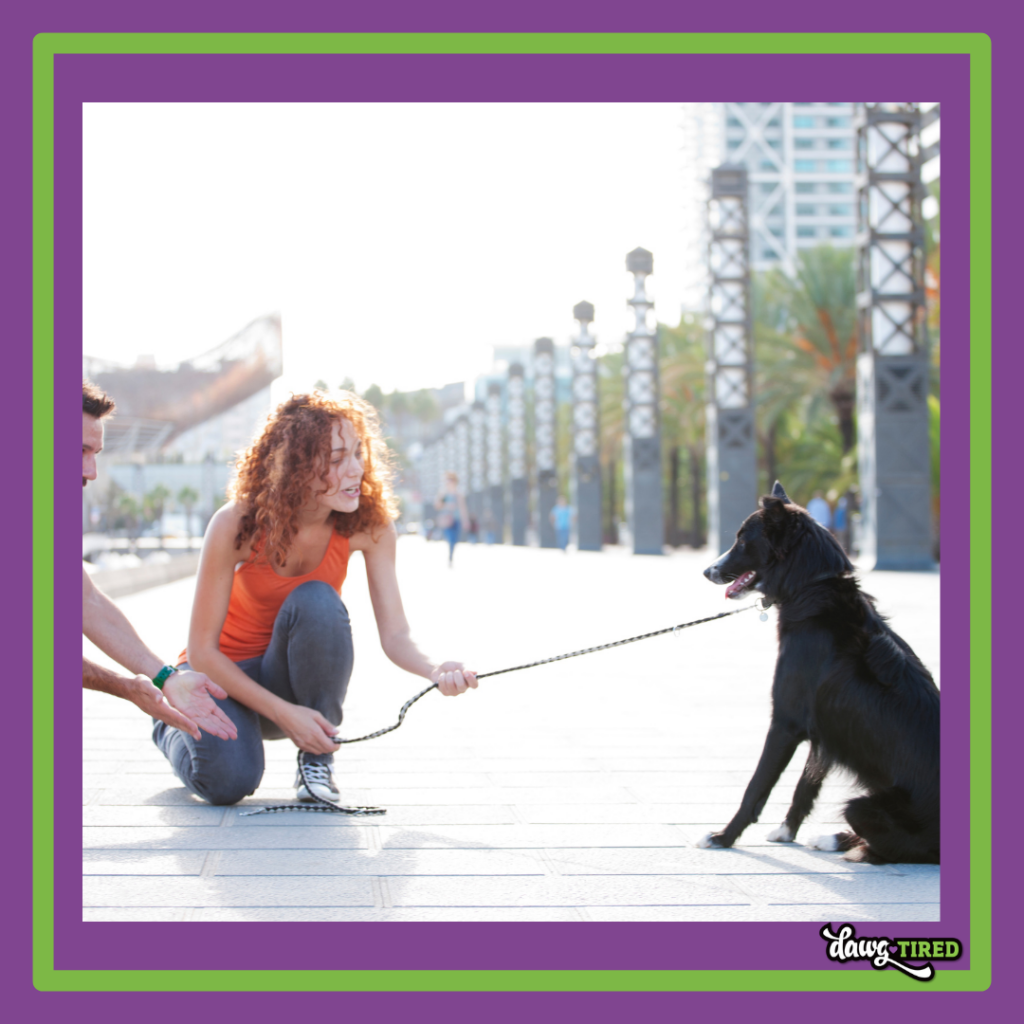
We’ve all said it. “He KNOWS this — he’s just being stubborn.” You ask for a sit, your dog stares back like you’ve started speaking Latin, and the frustration creeps in. I’ve been there too — every guardian has.
But after twenty-plus years and tens of thousands of dogs, here’s what I can tell you: “stubborn” is almost never the real story.
When a dog won’t do the thing, it’s usually one of three things going on — and not one of them is defiance.
1. They genuinely don’t understand yet.
We assume that because a dog did something once, in the kitchen, with cheese in our hand, they’ve “got it.” But dogs don’t generalise the way we do. A sit in your quiet living room is a completely different skill than a sit at the park with squirrels, smells, and another dog walking by. They’re not refusing — they’re saying “I don’t know what you mean in THIS picture.”
2. They’re over threshold.
Threshold is the point where a dog can no longer think and learn — they’re too excited, too nervous, or too overwhelmed to access their brain. Asking a dog to perform while they’re over threshold is like asking someone to do mental math during a fire drill. The answer isn’t more pressure. It’s less.
3. They’re reading your energy.
Dogs are body-language experts — it’s their first language. If you’ve become tense, sharp, or frustrated (totally human, by the way), your dog feels it, and a wary dog gets more cautious, not more cooperative. Sometimes the fastest way to change your dog’s behaviour is to change your own energy first.
The couch-to-5K of it all
You don’t roll off the couch and run a 5K. You start small, you build slowly, you celebrate the wins. Why would we expect our dogs to be any different? “Stubborn” is often just a dog who’s been asked to run before they’ve learned to walk.
So what do you actually do?
- Make it easier, not harder. Drop back a step. Win there. Build from success, not frustration.
- Check your own energy. Take a breath. Be in the NOW. Your calm is contagious — so is your tension.
- Read the body language. Yawning, lip-licking, looking away, a hard freeze — those are your dog telling you they’re struggling. Listen, and dial things down.
- Be patient with the new stuff. A dog learning something fresh can move slowly at the start. That’s not stubbornness. That’s learning.
Your dog isn’t giving you a hard time — they’re having a hard time, and they’re looking to you for direction. Give them clarity, give them patience, and give yourself grace too. Remember: progress, not perfection.
Feeling stuck with a particular behaviour? That’s exactly what we’re here for. Come learn with us in a Learn ‘n’ Play clinic, or reach out anytime at coaching@dawgtired.ca — we’d love to help you and your dog find your rhythm.